
April 6, 2023
Scissor lifts are versatile additions for many operations, from construction to landscaping. If you use this equipment, you’ll want to understand the different safety features of scissor lifts and how to use them.
Several electric scissor lift mechanisms are designed specifically to keep operators safe. These features include the entry gate, outriggers and the emergency stop. You also need to maintain and charge your batteries properly to avoid any incidents while in operation.
Emergency Stop
The emergency stop is a crucial safety feature on a scissor lift. It is a kill switch mechanism that turns off all power, stopping the machine from functioning at the press of a button. Ensure the emergency stop button works while performing your pre-operation inspection. Always test the emergency stop on the lower control panel and the platform’s top. You must be able to stop the scissor lift in the case of a malfunction, such as a machine running on its own or a valve or control getting stuck.
The emergency stop is easy to spot as it is typically the large red button on the controls. It is either a metal or plastic button attached to a metal base, which connects to a contact block with wires going in and out. Pushing the emergency stop button opens the circuit to stop power. Pulling out the emergency stop closes the circuit so the lift can operate normally.
Entry Gates
The importance of the energy gate can get overlooked due to its unassuming nature. It is a crucial safety feature on electric scissor lifts. There are two main types of entry gates — a sliding swing gate and an entry chain. As the name suggests, sliding swing gates swing out from the fall protection board on scissor lift platforms. These entry gates are typically found on new machines that adhere to the updated American National Standards Institute (ANSI) safety regulations. Older machines generally have a chain across the platform’s entry.
Entry gates prevent users from accidentally stepping off the platform. Sliding swing gates provide significantly more protection than chain gates. Ensure you properly secure the entry gate whenever you operate a scissor lift.
Pothole Protection
Despite being called a pothole protection system, this electric scissor lift mechanism ensures the safe operation of an electric lift on any uneven ground. Pothole protection systems are metal pieces that flip down when you raise a scissor lift. If one wheel loses contact with the ground, these metal pieces ensure that the lift platform can be lowered without tipping over the machine. This feature is essential when you are on sites with uneven ground or if you drive into a ditch by mistake.
Limit switches attached to the system are activated when the lift is in the air. These switches let the computer relay system know that the protection system is in place and allows you to drive. Once the lift has been lowered, these pieces retreat into the machine.
Before 1996, these systems were not required on all machines. Older machines had larger ground clearance, leading to machines tipping on uneven surfaces. Since then, pothole protection systems have become the norm.

Platform Capacity
The platform capacity of a scissor lift will depend on the brand, its height lift and the deck extension capacity. Platform capacity decals are typically located near the entry gate of a scissor lift and tell you how much weight a platform and extension deck can handle. The new ANSI regulations require these decals to state machines’ indoor and outdoor platform capacities. Older machines may only have a weight capacity for outdoor operations.
The deck extension capacity will differ from the regular platform capacity because the extension slides out from the platform past the machine’s end. Too much weight on the extension deck can affect its balance, causing the machine to tip. Newer scissor lift models have load cells with the capacity programmed into them. If you exceed the load capacity, the machine will show a platform overload code.
Lanyard Anchorage Points
Lanyard anchorage points are used to hook operators using harnesses to the machine. Depending on the model, they can be square, triangular or round openings along the mid-rail or near the platform’s deck. Some models may have a decal near the opening illustrating that it is an anchorage point. These points are essential if you are using a harness. The anchorage points are specifically made to stop operators from falling off a platform if the machine tilts or falls suddenly.
If you attach your harness hook to the handrail, it can slide along the rail before catching you and stopping your fall. Always use a lanyard anchorage point if you are in a harness.
Outrigger Leveling
Outriggers provide extra stability to scissor lifts when they are being lifted. The outriggers on your scissor lift may look different depending on their age and the model. Some are manual and require you to set them in place and level them, while others are automated and have self-leveling capabilities. If the outriggers on your equipment are manual, always check that they are level and locked in place before lifting the platform.
Models with motorized outriggers are easier to use. First, pull out the emergency stop and locate the outrigger button on the control panel while the machine is turning on. Once the lift is on, press the outrigger button and then press the trigger. The outriggers will start to come out. Generally, the front outriggers deploy first, followed by the rear riggers. If the machine has self-leveling capabilities, it will beep when it is level. You can now safely raise the platform.
Once you are done with an operation, ensure all parts of the aerial lift are correctly stowed away before driving it, including the outriggers and the pothole protection system.
Minimum Safe Approach Distance
Avoid approaching high-voltage lines in non-insulated equipment. Minimum safe approach distance (MSAD) refers to how close a scissor lift can come to a live wire before being electrified. The decal detailing the MSAD for different voltages will be on the side of your machine.
Battery Charging and Maintenance
Part of operating a scissor lift is ensuring the battery is well maintained and adequately charged. Scissor lift batteries are generally located on the side of the machine below the deck. A silver charger should be next to the batteries when you pull them out. Some models may have the charger behind the steps leading onto the deck. Avoid charging your batteries in confined spaces.
Aerial lift battery chargers have a high amperage draw. The batteries may show reduced capabilities if too many machines are plugged into one outlet. Try to stick to a maximum of two lifts per outlet and avoid using extension cords more than 25 feet long.
If you use wet cell batteries, you must check the water levels regularly. The best time to do this is after they have been charged. Water should cover the plates with clean water and reach the plastic level line below the caps. In multi-cap batteries like the Trojan, you need to open every cap to check the water level in the individual compartments.
You can spray batteries with a sealant to prevent corrosion.
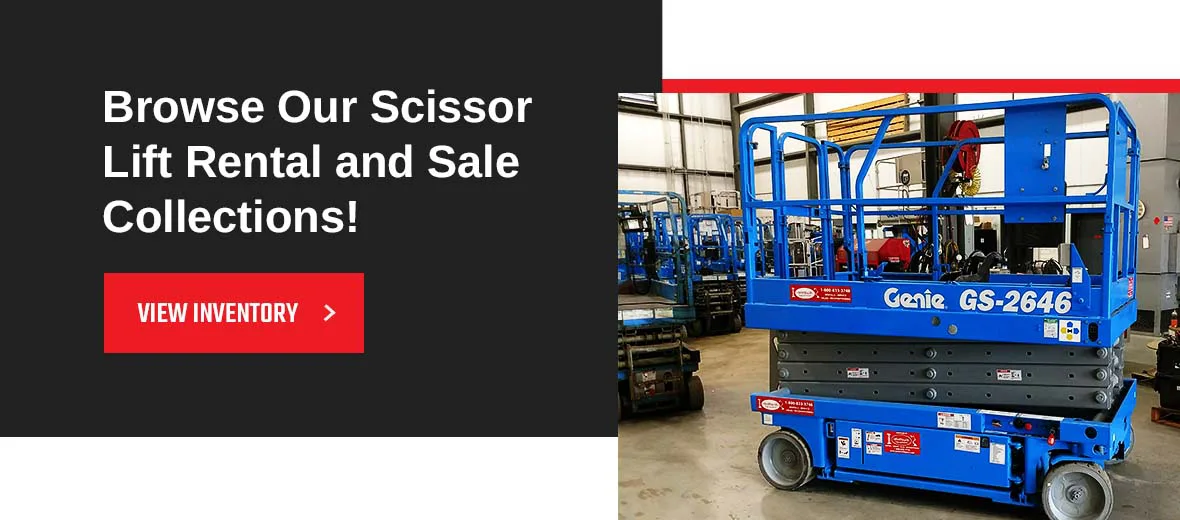
Browse Our Scissor Lift Rental and Sale Collections!
Now that you understand all the safety features and components of a scissor lift, you can find the right fit for your company. At Wellbuilt Equipment Inc., safety is our top priority. Whether for sale or rent, all our machines have operator manuals with detailed safety instructions for you. If you want to learn more about safety, we also offer safety training for you and your team.
View our range of rental and sales scissor lifts today!

