
December 23, 2024
Industrial aerial lifts are invaluable tools, and their efficiency and safety rely heavily on regular maintenance. As an aerial lift owner or operator, scheduling routine protocols like inspections, operator training and breakdown prevention can ensure your crew’s safety and your equipment’s longevity. Maintenance can also help you meet regulatory compliance and prevent fines.
Read on to learn more about the necessity of maintenance and how to keep your aerial lifts in top condition to ensure success.
Importance of Regular Aerial Lift Maintenance
Routine aerial lift maintenance is critical for several reasons.
Ensuring Safety and Efficiency
Regular maintenance is crucial for adhering to safety measures and guidelines. Without proper maintenance, aerial lifts can cause accidents that potentially result in injuries or fatalities. By following a routine maintenance schedule, you can better identify and address issues before they escalate, keeping your crew safe and your equipment in good condition.
Preventing Operational Issues
Consistent maintenance helps prevent operation issues. Problems like hydraulic leaks, electrical failures or mechanical breakdowns can disrupt work, delay projects and lead to costly downtime. A well-maintained aerial lift operates more smoothly and efficiently, contributing to the productivity and success of your business.
Regulatory Compliance
Occupational Safety and Health Administration (OSHA) regulations require that aerial lifts undergo regular inspections and maintenance to meet safety standards. Failure to comply can result in penalties and increased liability for your business.
Cost Savings
By prioritizing maintenance, you can enhance the longevity of your equipment and maximize your investment. Routine inspections and services help identify and resolve issues before they become major and require costly repairs. They also reduce the chances of catastrophic equipment failure, leading to downtime, lost productivity and expensive emergency repairs. Additionally, well-maintained aerial lifts often operate more efficiently, consuming less fuel and energy. This translates into lower operating costs, which can improve your bottom line.

Aerial Lift Maintenance Checklist
OSHA emphasizes the importance of proper inspection requirements for aerial lifts. Explore some key aspects.
1. Visual Inspections
OSHA recommends performing daily inspections and weekly and monthly checks depending on how often you use your lift. Annual inspections are also critical, typically performed by a qualified technician to ensure compliance. A comprehensive daily inspection checklist should include a visual inspection of the following:
- Safety decals: Ensure all safety and warning decals are in place and legible.
- Missing equipment: Check for any missing components or safety gear.
- Tires and tracks: Examine the tires for proper inflation and tread. Check the tracks for debris or wear.
- Damage: Look for rust or other damage that may compromise safety.
2. Operational Checks
In addition to visual inspections, operational checks ensure all systems function correctly. Operators should verify:
- Fluid Levels: Check oil, fuel, coolant and hydraulic fluid levels.
- Brakes: Test braking devices for proper operation.
- Battery charge: Ensure the battery is adequately charged and there is no corrosion.
- Controls: Confirm that lift and driving controls are operational.
- Emergency systems: Test emergency lights, horns and alarms to ensure they are functional.
3. Structural Checks
Ensuring the structural integrity of the aerial lift is vital for safety. Key structural components to check daily include:
- Pneumatic, hydraulic and electrical systems: Look for leaks or wear.
- Emergency features: Verify that safety mechanisms are intact and operational.
- Guard rails and platforms: Ensure they are stable and secure.
- Outriggers: Confirm that outriggers are functioning correctly.
- Protective gear: Check that all protective gear is in place and secure.
- Fasteners and lock pins: Inspect for any loose or missing parts.
These inspections are the first line of defense against potential issues that could compromise safety and efficiency — protecting both personnel and equipment.
4. Work Zone Checks
When operating aerial lifts, operators must assess the work area for risks like overhead power lines, unstable ground and inclement weather. Use spotters and safety barriers to mitigate hazards. Regular communication and safety briefings can also help keep all team members aware of potential risks and precautions.
Key areas to evaluate include:
- Ground conditions: Look for unstable, uneven or slippery surfaces, as well as slopes and drop-offs.
- Overhead hazards: Identify any overhead structures, such as HVAC systems or power lines, that may pose risks.
- Blocked areas: Check for blind spots or areas obstructed by debris or equipment.
- Weather conditions: Be aware of dangerous weather conditions, such as strong winds, that could affect operations.
Always use personal protective equipment, including harnesses, lanyards and hard hats. Do not exceed load capacity and watch for traffic.
Maintenance and Safety Tips
Aerial lift operators should follow these maintenance and safety tips.
Training and Certification
Training is the most critical aspect of a safe worksite when it comes to heavy equipment operation. Ensure that all operators are trained and certified. They should understand how to operate the equipment safely and effectively, including its features, safety protocols and emergency procedures. Training can minimize accidents and promote a safer jobsite.
Dielectric Insulation Testing
Dielectric insulation testing is another crucial aspect of aerial lift maintenance. It ensures the integrity of electrical insulation, thereby protecting operators when working near electrical hazards. This testing should be performed annually, but more frequent checks might be necessary based on usage and environmental factors.
Cost Management
There are several ways to balance cost-effective solutions with safety and efficiency. For one, investing in regular inspections and preventative maintenance can help you save money in the long run. That’s because it reduces the need for repairs and downtime. You can also streamline maintenance by partnering with Wellbuilt Equipment Inc. We offer cost-effective solutions, including training programs and maintenance services tailored to your specific operational needs.
Documentation
Be sure to keep detailed records of inspections, repairs and maintenance activities. Record-keeping will help you comply with OSHA standards and track your equipment’s history and performance over time. Tracking the root causes of equipment problems allows for proactive maintenance planning. If the equipment is involved in a workplace incident, these detailed records can support your legal case if claims arise.
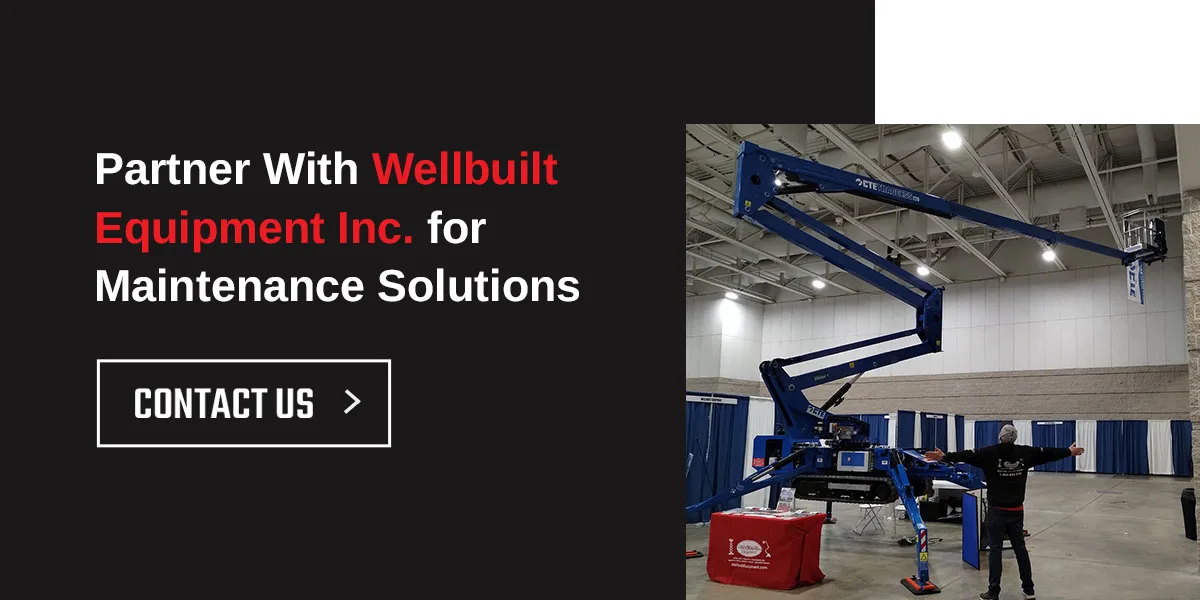
Partner With Wellbuilt Equipment Inc. for Maintenance Solutions
Establishing a comprehensive checklist can help prevent equipment failures and breakdowns. These checklists should include daily, weekly and monthly inspections that align with aerial lift inspection standards. Preventative maintenance strategies can prolong your equipment’s life span, minimize costly repairs and promote a safe workplace.
Implement a comprehensive aerial lift maintenance plan with WellBuilt Equipment Inc. We can perform routine inspections and maintenance to maintain your equipment. We also provide aerial lift training and certification to ensure your team can safely operate the equipment.
Contact us today to learn how we can help you optimize your aerial lift maintenance processes and enhance safety on your jobsite.

